

Can Automatic Doors Be Added to an Existing Building?
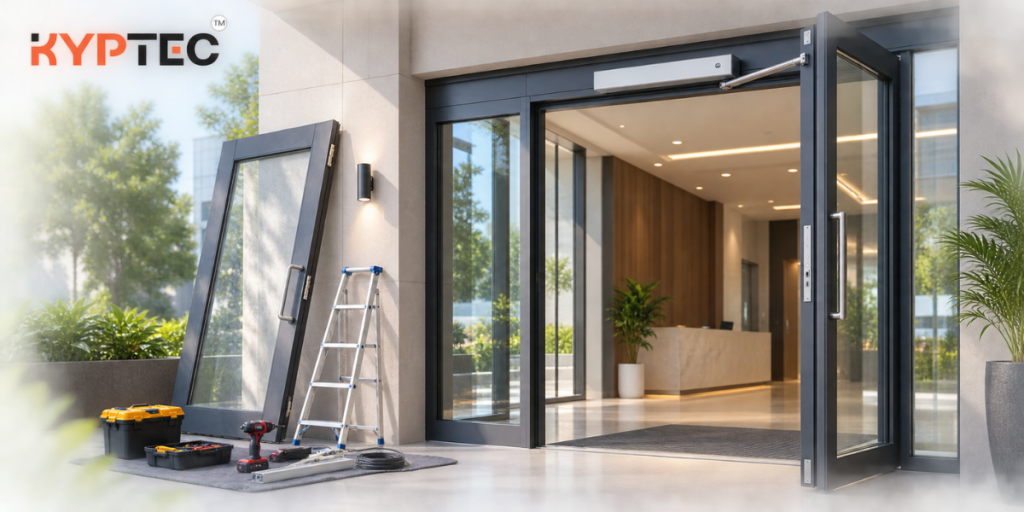
Automatic doors are becoming common in offices, hospitals, hotels, shops, showrooms, and commercial buildings. They make entrances easier to use and can help manage the movement of people through busy areas.
But what if a building already has a conventional manual door?
Many building owners wonder whether they need to completely replace the existing entrance to install an automatic system. In many situations, an existing door can be automated, but the right approach depends on the door’s condition, size, weight, structure, and available space.
Before making a decision, it helps to understand what needs to be checked.
Can an Existing Door Be Made Automatic?
Yes, some existing doors can be converted into automatic doors by adding the appropriate automation equipment.
However, automation is not suitable for every door. A professional assessment should be carried out before selecting a system.
Some important factors include:
- Type and condition of the existing door
- Door size and weight
- Available space around the entrance
- Condition of hinges, tracks, and frames
- Electrical power availability
- Number of people using the entrance
- Required safety features
- Type of opening and closing movement
For example, a suitable manual swing door may be automated using an automatic swing door operator. An existing sliding door may also be suitable for automation if its structure and track arrangement meet the required conditions.
Which Existing Doors Can Be Automated?
The possibilities depend on the design and condition of the entrance.
Swing Doors
Manual swing doors are one of the common types that can potentially be automated. An automatic door operator can control the opening and closing movement.
This can be useful in offices, clinics, hotels, and other locations where there is enough clearance for the door to swing safely.
Sliding Doors
Some manual sliding doors can be converted into automatic sliding doors if the existing panels and structure are suitable.
If the current door is old or the existing track cannot support an automation system, replacing the mechanism or installing a new automatic sliding door may be a better option.
Glass Doors
Glass entrances are often found in offices, retail stores, hotels, and showrooms. Depending on the glass type, panel weight, frame, and existing fittings, automation may be possible.
The glass and mounting arrangement should be checked before selecting an operator.
Heavy Commercial Doors
Large and heavy doors require additional consideration. The automation system must be capable of handling the door’s weight and expected frequency of use.
If the existing door has damaged hinges, tracks, or other hardware, those problems should be addressed before automation.
What Should Be Checked Before Installation?
Adding automation to an existing entrance is more than simply installing a motor. The entire door should be assessed first.
1. Door Condition
The existing door should move smoothly when operated manually.
If it sticks, drags against the floor, or requires excessive force to open, these issues should be resolved before adding automation.
2. Door Weight and Size
Every door operator has specific operating limits. The door’s dimensions and weight help determine whether a particular system is suitable.
Using an operator that is not designed for the door can affect performance and increase wear.
3. Available Space
The surrounding space also affects the choice of system.
A sliding door needs sufficient space beside the opening for the panels to move. A swing door requires enough clearance for the door leaf to open without hitting people, furniture, or nearby structures.
4. Electrical Supply
Automatic doors require an electrical connection. The installation should consider where power is available and whether additional electrical work is required.
Does the Existing Door Need to Be Replaced?
Not necessarily.
If the existing door is in good condition and compatible with the selected automation system, it may be possible to keep the door and add an operator, sensors, and other required components.
However, replacement may make more sense when:
- The existing door is damaged
- The frame is weak or unsuitable
- Hinges or tracks are badly worn
- The door is too heavy for available equipment
- The current design does not provide enough operating space
- A different door configuration would work better
The decision should be based on the condition and requirements of the entrance rather than simply choosing the least expensive option.
What Components Are Added?
An automated entrance can contain several components working together.
Door operator: Provides the mechanical movement needed to open and close the door.
Sensors: Detect movement or presence around the entrance.
Controller: Receives information from the sensors and manages the door’s operation.
Safety sensors: Help detect people or objects in the doorway and support safer movement.
Activation devices: Depending on the application, the door may also use push buttons, access control systems, remote controls, or other activation methods.
The exact setup depends on the door type and how the entrance is expected to be used.
What About Safety?
Safety should be considered before installation.
An automatic door should be configured so that its opening and closing movements are appropriate for the entrance. Sensors and safety systems can help detect people or objects in the door’s path.
This is particularly important in busy locations where people may approach from different directions or stop in the doorway.
Proper installation and adjustment are therefore just as important as selecting the equipment itself.
Can Automation Improve Accessibility?
One advantage of automating an existing entrance is that it can reduce the physical effort required to open a door.
A manual door may be difficult to operate for someone carrying bags, pushing equipment, or having limited mobility. An appropriately designed automatic entrance can make movement through the doorway more convenient.
Automatic entrances can be useful in:
- Hospitals and clinics
- Offices
- Hotels
- Retail stores
- Educational buildings
- Public facilities
- Commercial complexes
Accessibility requirements vary depending on the building, so the entrance should be planned accordingly.
How Much Modification Is Required?
There is no standard amount of modification for every building.
Some entrances may only require the installation of an appropriate operator and sensors. Others may require changes to the door, frame, electrical supply, or surrounding area.
For example:
Existing Entrance | Possible Approach |
Good-condition swing door | Add suitable swing-door automation |
Suitable manual sliding door | Add or upgrade the automation mechanism |
Damaged door | Consider replacing the complete entrance |
Heavy commercial door | Check operator capacity carefully |
Limited side space | Consider a suitable swing-door solution |
An assessment of the actual entrance is the best way to determine how much modification will be needed.
Should You Automate or Replace the Door?
There is no single answer.
If the existing door is structurally sound and works smoothly, adding automation may be a practical solution. If the door is old, damaged, poorly designed, or unsuitable for automation, replacement may provide better long-term results.
The key is to look at the whole entrance, rather than focusing only on the automation equipment.
Final Thoughts
Adding automatic doors to an existing building is often possible without replacing the entire entrance. The key is to check the condition, size, weight, structure, and available space before choosing an automation system. With the right operator, sensors, and safety features, a conventional door can become easier and more convenient to use.
KYPTEC focuses on practical entrance automation solutions that can be considered for different building requirements. A proper site assessment can help determine whether the existing door can be automated or if replacement would be a better option.