

Entrance Automation: A Complete Guide from Basics to Advanced Technology
Introduction
A building entrance is more than a simple point of entry and exit. It affects security, convenience, accessibility, traffic movement and the overall experience of visitors and employees. As buildings become more connected, traditional manual entry systems are increasingly being replaced with automated solutions.
Entrance automation combines mechanical equipment, sensors, motors, controllers and access technologies to manage the movement of people and vehicles with less manual intervention.
From automatic doors and motorized gates to connected access control and smart monitoring, entrance automation has developed significantly over the years. This guide explains how entrance automation works, its key components, common applications and how modern technology is taking these systems to the next level.
What Is Entrance Automation?
Entrance automation refers to technologies that automatically control the opening, closing and access of an entrance.
Depending on the property, an automated entrance can be designed for pedestrians, vehicles, goods or a combination of these.
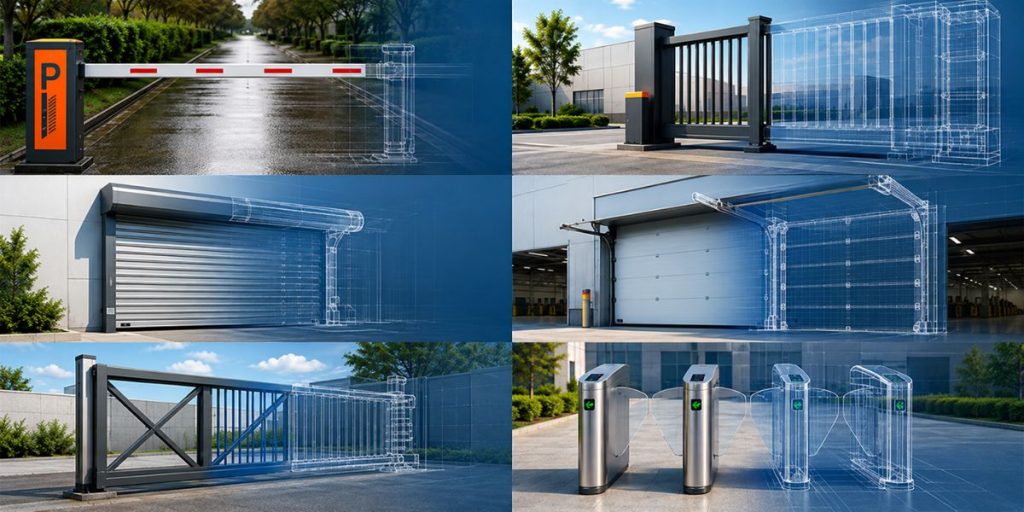
Common examples include:
- Automatic sliding and swing doors
- Motorized gates
- Boom barriers
- Rolling shutters
- High-speed doors
- Access control systems
- Sensors and safety devices
The objective is not simply to make an entrance open automatically. A properly designed system can also improve movement, control access and create a safer and more convenient entry experience.
How Does Entrance Automation Work?
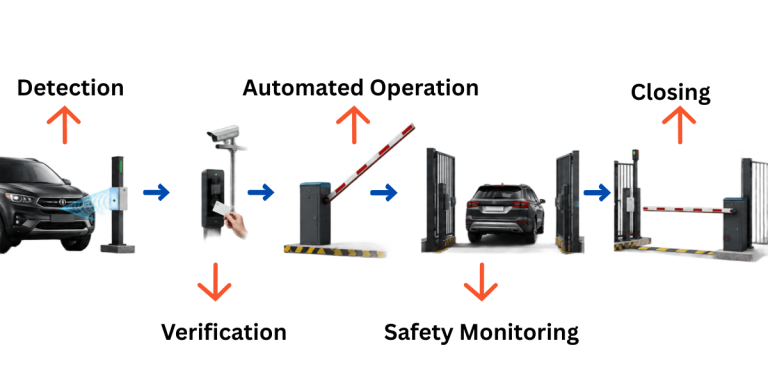
Although different systems use different technologies, most automated entrances follow a similar process.
1. Detection
The system first detects a person, vehicle or access request. Sensors, remote controls, RFID devices, access cards or other technologies can provide the required signal.
2. Verification
For controlled entrances, the system checks whether the person or vehicle has permission to enter. This can involve access cards, RFID, biometric systems, mobile credentials or other identification technologies.
3. Automated Operation
Once the required conditions are met, the controller activates the motor or operating mechanism. The entrance then opens or moves according to its design.
4. Safety Monitoring
Sensors and safety devices monitor the operating area. If an obstacle or person is detected where necessary, the system can respond according to its safety configuration.
5. Closing
After the entrance has been used, the system can automatically return to its closed or secure position.
This basic process forms the foundation of many entrance automation systems.
Key Components of an Entrance Automation System
A complete automated entrance is made up of several components that work together.
Motors and Drives
The motor provides the power needed to move doors, gates, shutters or barriers. Motor selection depends on factors such as size, weight, operating frequency and required speed.
Sensors
Sensors detect movement, presence or obstacles. They play an important role in both automation and safety.
Controllers
The controller acts as the central operating unit. It receives signals from sensors or access devices and communicates with the motor and other components.
Access Control
Access control determines who or what is allowed to enter a restricted area. Depending on the application, it can include RFID, access cards, biometrics, mobile credentials or vehicle identification systems.
Safety Devices
Safety sensors and related devices help reduce the risk of unwanted movement or contact during operation.
Together, these components turn a conventional entrance into an automated system.
Types of Entrance Automation
Different properties require different types of automated entrances, depending on space, traffic, security and the way people or vehicles move through the entry point.

Automatic Doors
Automatic sliding and swing doors are widely used in offices, hotels, hospitals, retail stores and commercial buildings. They allow people to enter and exit without manually handling the door.
Motorized Gates
Motorized gates automate vehicle or property entrances. They can be used for residential communities, commercial properties, industrial facilities and institutional campuses.
Boom Barriers
Boom barriers are commonly used where vehicle movement needs to be controlled, such as parking areas, industrial sites, offices and gated properties.

Rolling Shutters
Motorized rolling shutters automate the opening and closing of commercial and industrial openings while providing controlled access.

High-Speed Doors
High-speed doors are designed for locations where frequent movement and fast opening and closing are important, particularly in industrial, warehouse and logistics environments.
The right system depends on the type of traffic, available space, operating frequency and security requirements.
From Basic Automation to Smart Entrance Systems
The earliest form of entrance automation focused mainly on automatic movement. A sensor detected someone approaching, and a motor opened the door.
Modern systems can do much more.
An advanced entrance may connect:
Detection → Access Verification → Controller → Automated Equipment → Safety System → Monitoring
This allows the entrance to become part of a wider security or building-management system.
For example, a vehicle entrance may combine identification technology with a motorized gate or boom barrier. A commercial building may connect automatic doors with access control and security systems.
The key difference is that basic automation focuses on movement, while smart automation focuses on movement plus information, connectivity and control.
Role of IoT in Entrance Automation
The Internet of Things (IoT) is creating new possibilities for connected entrance systems.
Instead of operating as an isolated piece of equipment, an entrance can communicate with centralized software or other connected systems.
Depending on the solution, connected technology can support:
- Remote system monitoring
- Access activity tracking
- System status notifications
- Centralized management
- Usage data collection
- Integration with other building systems
This can be particularly useful for large commercial buildings, campuses, industrial facilities and properties with multiple entrances.
How AI Could Influence Entrance Automation
Artificial intelligence is another emerging technology that could influence the future of automated entrances.
AI can potentially help systems interpret information from cameras, sensors and other connected devices.
Future applications could include:
- Intelligent visitor identification
- Advanced vehicle recognition
- Traffic pattern analysis
- Anomaly detection
- Predictive maintenance
- Smarter access decisions
However, advanced technology should always be selected based on the actual requirements of the property. Not every entrance needs AI or complex connectivity.
Where Is Entrance Automation Used?
Entrance automation can be adapted to many environments.
Commercial Buildings: Automatic doors and access systems can improve visitor movement and controlled entry.
Residential Communities: Motorized gates and vehicle access systems can help manage residents and visitors.
Industrial Facilities: Automated gates, shutters and high-speed doors can support frequent movement of people, vehicles and materials.
Warehouses: High-speed doors and automated access systems can help manage movement between operational areas.
Hospitals: Automatic doors can provide convenient, hands-free access for patients, visitors and staff.
Hotels and Retail Stores: Automated entrances can improve accessibility and create a smoother visitor experience.
Benefits of Entrance Automation
When properly designed, entrance automation can provide several practical benefits:
Better Convenience
People can enter and exit without manually operating doors or gates.
Improved Traffic Flow
Automation can help reduce unnecessary waiting at frequently used entrances.
Controlled Access
Integration with access control technologies can help restrict entry to authorized users.
Improved Accessibility
Automatic doors can make entrances easier to use for people with different mobility requirements.
Operational Efficiency
Automating repetitive entry and exit operations can reduce the need for manual intervention.
Better Monitoring
Connected systems can provide greater visibility into entrance activity and equipment status.
How to Choose the Right Entrance Automation System
There is no universal solution for every property. Before selecting an entrance automation system, consider:
- Type of traffic – pedestrian, vehicle, goods or mixed.
- Traffic volume – how many users or vehicles pass through the entrance.
- Available space – the site layout can influence the suitable entrance mechanism.
- Operating frequency – occasional and high-frequency entrances have different requirements.
- Security level – determine whether basic automation or controlled access is needed.
- Safety requirements – consider sensors and emergency operation.
- Integration needs – check whether the system needs to connect with CCTV, access control or building management systems.
- Maintenance – long-term service and reliability should be considered during selection.
The Future of Entrance Automation
The future of entrance automation is moving beyond simple automatic opening and closing.
Connected systems, IoT, advanced sensors, data analytics and AI could allow entrances to become more responsive and intelligent. Instead of working independently, doors, gates, barriers and access systems can increasingly become part of a connected building ecosystem.
The focus is shifting from “Can this entrance open automatically?” to “How intelligently can this entrance manage access and movement?”
As smart buildings continue to develop, entrance automation will become an increasingly important part of building design, security, accessibility and everyday operations.
Conclusion
Entrance automation has evolved from simple motorized mechanisms into intelligent systems that combine sensors, controllers, access control and connected technologies. Today, it helps buildings manage entry with greater convenience, safety and efficiency. From automatic doors and motorized gates to advanced access solutions, KYPTEC provides entrance automation solutions designed around different property requirements. As IoT, AI and smart-building technologies continue to develop, entrance automation is becoming more connected, responsive and efficient.